
Blog
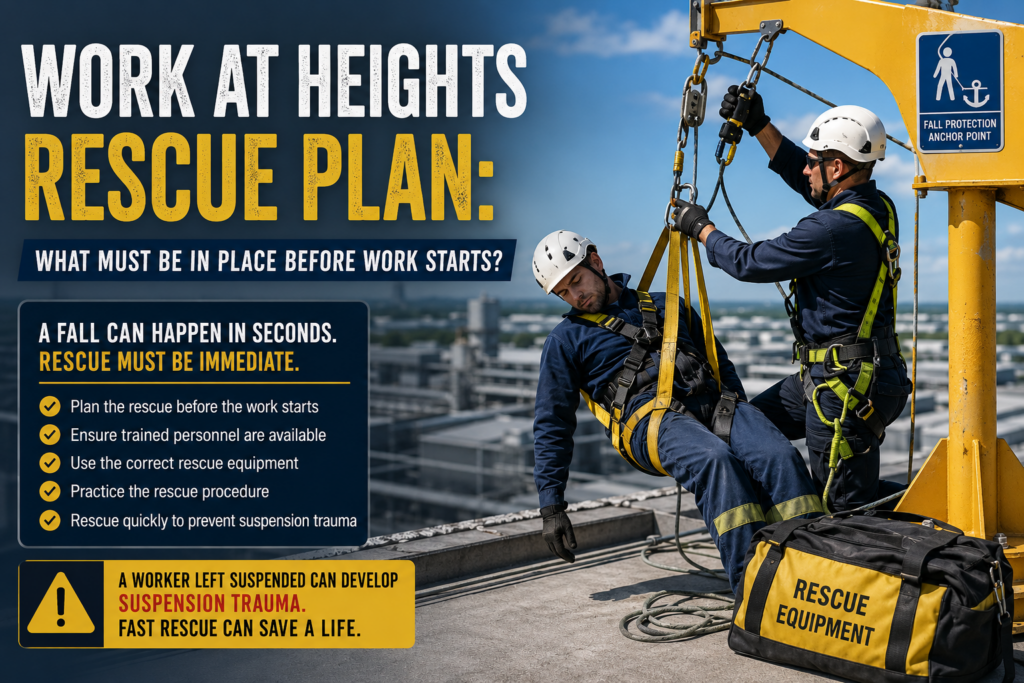
Work at Heights Rescue Plan: What Must Be in Place Before Work Starts?
A harness can stop a person from hitting the ground. It does not make them safe once the fall has been arrested. If employees or contractors are working at heights on your site, you need to know what will happen if somebody falls and is left suspended in their...
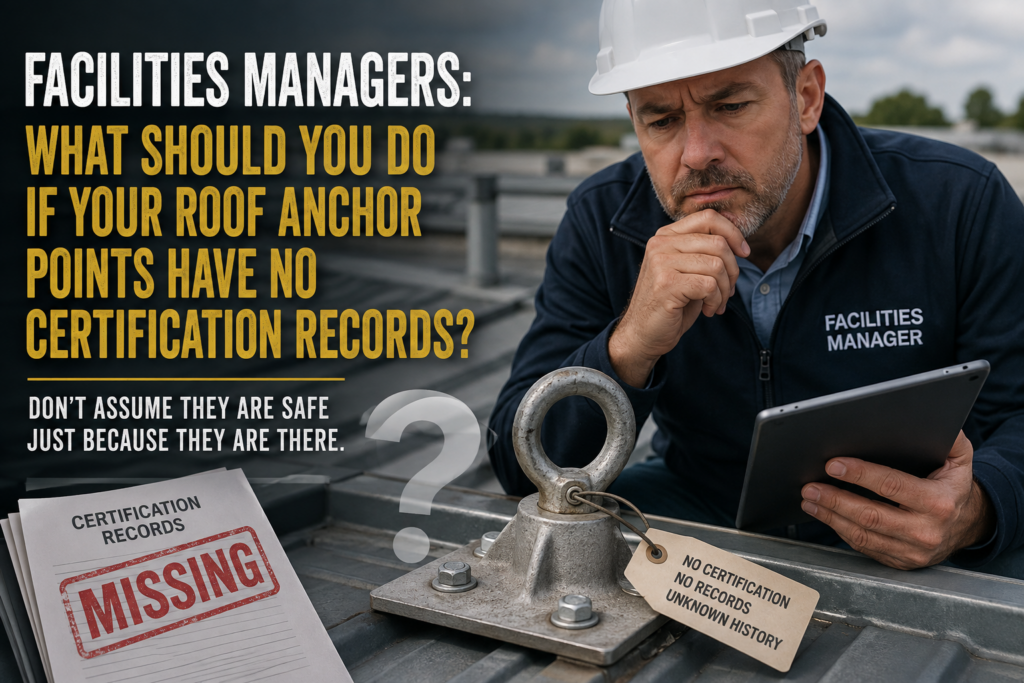
Facilities Managers: What Should You Do If Your Roof Anchor Points Have No Certification Records?
Your contractor arrives to carry out roof work and asks where they can attach their harnesses. You point to the anchor points already installed on the building — and then somebody asks for the certification. Nobody can find it. There are no drawings, no...
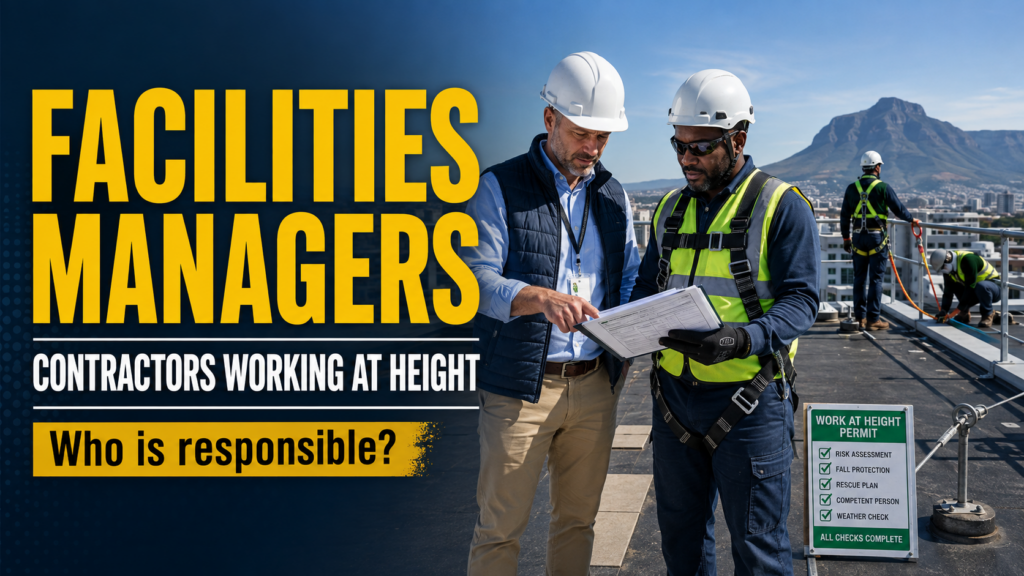
Facilities Managers: Does Appointing a Contractor Remove Your Work-at-Height Responsibility?
If you appoint a specialist contractor to work on your roof, façade or other elevated area, does the responsibility for working safely now belong entirely to the contractor? For facilities managers, this is an important question. You may appoint the contractor...

What Should a Facilities Manager Check Before Contractors Work at Height?
If contractors are going to work at height on your site, checking that they have harnesses and training certificates is not enough. As the facilities, maintenance, safety or project manager, you need confidence that the work has been properly planned, the fall...
How Do You Safely Lower a TSP During a Power Failure?
If a Temporary Suspended Platform loses power while it is suspended, the operators can still lower the platform using the TSP’s no-power descent system. A properly equipped TSP has a system that allows the hoists to descend at a controlled speed without...

What Happens When a TSP Safety Brake Trips?
If a TSP safety brake trips, the operator must understand why the platform has stopped and must never try to force or reset the safety brake while it is carrying the load. The secondary safety brake, commonly referred to as a Skylock on many Temporary Suspended...

Where Must a TSP Operator Attach Their Safety Harness?
Every person working from a Temporary Suspended Platform must wear a body harness and remain attached to the suspended platform at all times. The TSP itself must be fitted with suitable anchorage points to which workers attach the lanyards of their harnesses. This...
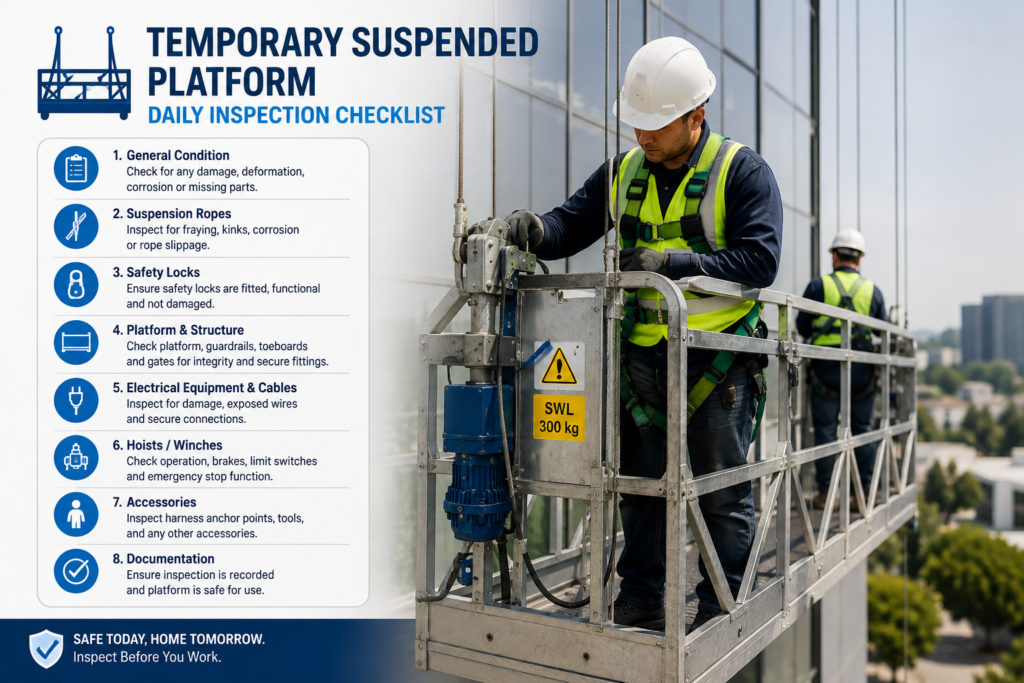
Temporary Suspended Platform Daily Inspection Checklist
The daily inspection of a Temporary Suspended Platform must be conducted by the TSP Supervisor before the platform is used. The inspection is not simply a quick visual check of the basket. The TSP Supervisor must inspect the complete system and confirm that the...

TSP Operator vs Erector vs Supervisor Training
Temporary Suspended Platform Operator, Erector and Supervisor training are three different competency levels and should not be treated as interchangeable. The operator is trained to safely work from and operate the platform, the erector is trained to install,...
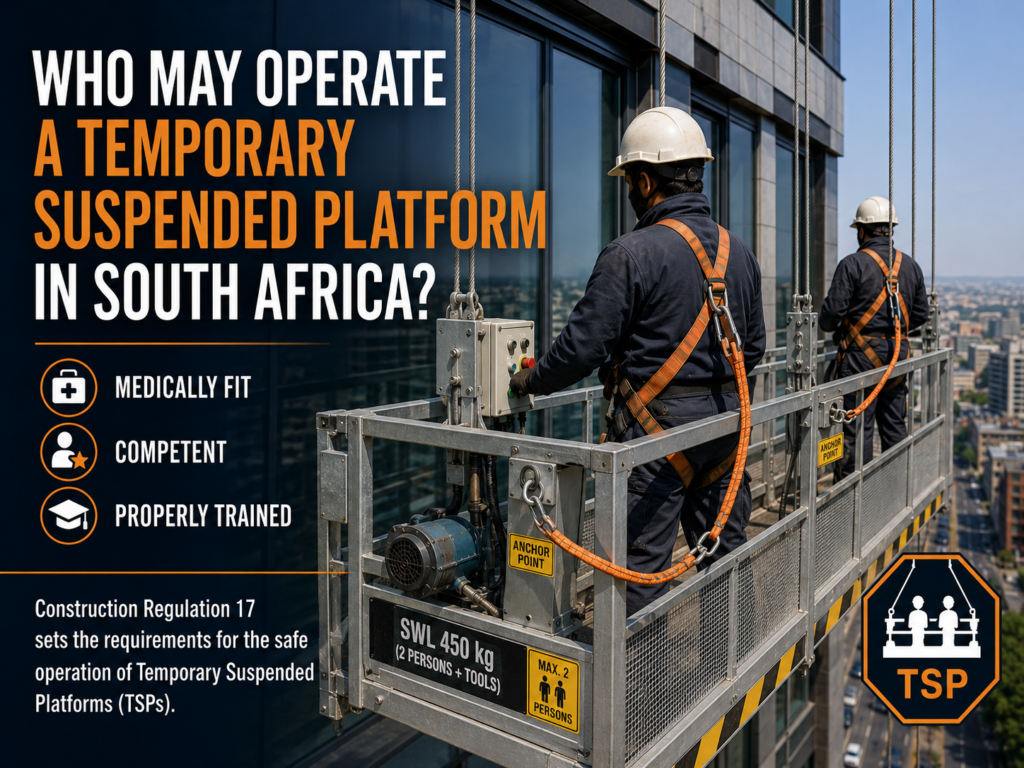
Who May Operate a Temporary Suspended Platform in South Africa?
A temporary suspended platform may only be operated by a person who is medically fit, competent and properly trained for suspended-platform work. Construction Regulation 17 places specific duties on the contractor regarding operator competence, training,...
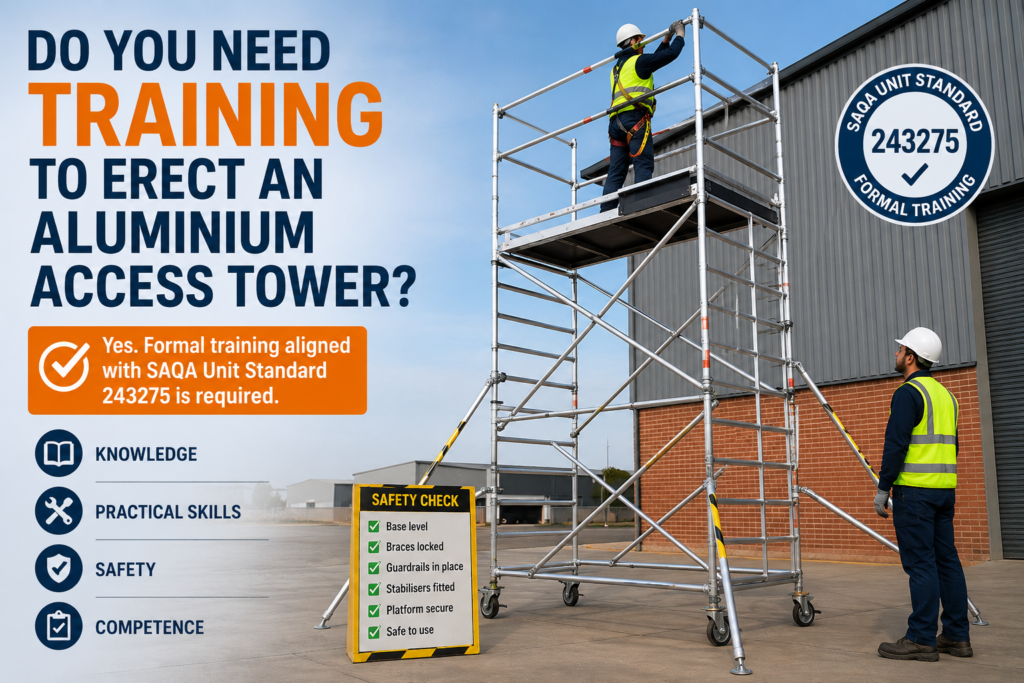
Do You Need Training to Erect an Aluminium Access Tower?
Yes. A person who erects, moves or dismantles a prefabricated aluminium access tower should complete formal training aligned with SAQA Unit Standard 243275. The programme provides the knowledge and practical skills required to identify tower components, prepare the...
Not Sure Which Work-at-Heights Training Your Team Needs?
The correct training depends on the work your employees will actually perform, the equipment they will use and the responsibilities they will carry.
WAHS can help you identify the appropriate training for fall arrest, rescue, fall protection planning, aluminium access towers, ladder users and Temporary Suspended Platform operators, erectors and supervisors.
Tell us what work your team performs and we will help you select the appropriate programme.
If you are planning training for your team, tell us what work they perform, what equipment they use and what responsibilities they carry.
We can help you identify the most appropriate work-at-heights training programme and provide a quotation for training at our centre or, where suitable, on your site.
Send us your requirements and we will help you choose the right course.
+27 11 902 3470
nadine@wahs.co.za
95 Bloutulp Road, Alberton